
Chirality Takes Center Stage: the 2026 Nobel Prize in Chemistry
Chirality is having a big (and well deserved) moment.
The 2026 Nobel Prize in Chemistry was awarded to Henri B. Kagan and Kenso Soai for their discoveries involving non-linear effects and autocatalysis in asymmetric organic synthesis. Their work addressed a fundamental question in chemistry: how can a reaction be driven toward one mirror-image form of a molecule rather than producing an equal mixture of both?
For anyone working in chiral chemistry, this is a particularly exciting recognition.
And for our team, it’s more than a celebration of an important scientific breakthrough – it’s a reminder of how closely synthesis and separation are connected. As we explored the research behind Soai’s work, we found Daicel chiral columns cited in several studies, helping researchers analyze and characterize chiral compounds. After all, making a molecule is one thing; understanding what you’ve made is another.
So, what makes chirality so important in chemistry anyways?
Why Does Chirality Matter?
The simplest way to think about chirality is to think about your hands. Your left and right hands are mirror images of each other, but they’re also not identical twins either. Molecules can have that same kind of “handedness.”
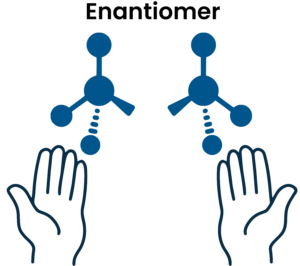
Two molecules may end up looking nearly identical on paper, but they can behave very differently in a chemical or biological system – existing as mirror-image forms of one another (i.e., as enantiomers).
That difference is just one of the reasons chirality matters so much in chemistry, especially in pharmaceuticals and similar applications, where the molecule’s shape can affect how it behaves in the body.
So, the challenge isn’t simply making a molecule; it’s controlling which “hand” of that molecule you make.
From a Small Imbalance to Something Bigger
This is where the work recognized by this year’s Nobel Prize gets interesting.
Kagan and Soai’s research helped advance our understanding of how small differences in chirality can become much larger ones through asymmetric reactions and autocatalysis.
In simple terms, autocatalysis happens when a product of a reaction helps produce more of itself. In Soai’s research, it was highlighted that even a small initial preference for one version of a molecule can grow stronger as the reaction continues, leading to more of one “hand” than the other.
That idea has played an important role in helping scientists get a better understanding of how one form of a molecule can become more common than another. And that’s a really big deal in chemistry.
A Connection to Chiral Chromatography
There is another part of this story that especially caught our attention here at Daicel Chiral Technologies.
While exploring some of the research associated with Soai’s work, our team found multiple publications in which Daicel chiral columns were used to analyze chiral compounds – which is pretty cool!
Examples of Daicel chiral columns used in research connected to Soai’s asymmetric chemistry included:
- CHIRALCEL OD used to resolve racemic [6]- and [5]helicenes before the isolated helicenes were used as chiral initiators in Soai’s research
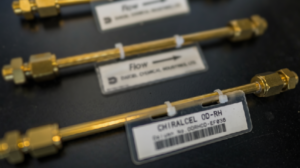
- CHIRALPAK AD and CHIRALCEL OD-H used for the analysis of chiral quinolyl alkanols in Soai-group research
- CHIRALCEL OD used to determine optical purity in research involving 5-pyrimidyl alkanols
- CHIRALPAK IB used to determine enantiomeric excess in later asymmetric autocatalysis work
Some of the published methods even include the specific chromatographic conditions and retention times. In other words, this isn’t simply a citation somewhere in a long reference list. These columns were actually part of the analytical work used to characterize the chemistry.
It’s a little like being the shoes an Olympian chose to wear when they win gold. You didn’t win the race, but it feels really special to know you helped enable the performance that did.
Plus, for us, it’s also a reminder of the role separation science plays alongside synthetic chemistry. Developing a chiral molecule is one challenge. But being able to separate, identify, and measure those molecules is another.
And sometimes, those two pieces of the scientific story intersect in an interesting way.
Why This Recognition Matters
The 2026 Nobel Prize brings attention to a question that has been central to chemistry for decades: how do we control molecular handedness?
The work of Kagan and Soai represents an important part of that story. It shows how chemists can use asymmetric reactions and autocatalysis to influence and amplify chirality – turning a small preference into something much more significant.
For those of us working in chiral separation, there’s another side to that same challenge – or you could say, the other hand.
Once you’ve made a molecule, how do you know which enantiomer you made? How much of each one is present? Did the reaction produce the selectivity you expected? That’s where chiral separation comes in.
Asymmetric synthesis also plays an important role in developing and manufacturing medicines with the desired enantiomer. But making the right form is only part of the process. Scientists also need to separate and measure enantiomers to make sure they have the desired purity. Chiral chromatography can help with that, too.
This is what makes this year’s Nobel recognition so exciting to us. It highlights the importance of chirality and reminds us that the work doesn’t end once a molecule is made.
You have to be able to make it, separate it, identify it, and measure it.
And we’re pretty excited that Daicel chiral columns have played a small part in this scientific journey. It may not be our gold medal, but it’s still special to know we’ve been part of the story.
It’s also worth noting that Kagan’s contributions to chiral chemistry were recognized well before this year’s Nobel Prize. In 1998, he received the Chirality Medal, an international scientific award instituted by the Societa Chimica Italiana (SCI) in 1998 – another acknowledgement of his impact on the field. Learn more about the Chirality Medal and see the full list of recipients.
Congratulations to Henri B. Kagan and Kenso Soai on this extremely well-deserved recognition – and to the many scientists whose work continues to push our understanding of chirality forward.
Read more about this exciting and well-deserved research award through the links below:
References
1. Sato et al. (2001) — CHIRALCEL OD
Sato, I., Yamashima, R., Kadowaki, K., Yamamoto, J., Shibata, T., & Soai, K. (2001). Asymmetric induction by helical hydrocarbons: [6]- and [5]helicenes. Angewandte Chemie International Edition, 40(6), 1096–1098. https://doi.org/10.1002/1521-3773(20010316)40:6%3C1096::AID-ANIE10960%3E3.0.CO;2-K
2. Sato et al. (2004) — CHIRALPAK AD / CHIRALCEL OD-H
Sato, I., Nakao, T., Sugie, R., Kawasaki, T., & Soai, K. (2004). Enantioselective synthesis of substituted 3-quinolyl alkanols and their application to asymmetric autocatalysis. Synthesis, 2004(9), 1419–1428. https://doi.org/10.1055/s-2004-822402
3. Shibata et al. (1997) — CHIRALCEL OD
Shibata, T., Hayase, T., Aiba, Y., Tabira, H., & Soai, K. (1997). Asymmetric synthesis of various chiral 5-pyrimidyl-alkanols by the enantioselective alkylation of pyrimidine-5-carbaldehydes with dialkylzincs in the presence of chiral amino alcohols. Heterocycles, 46(1), 235–240. https://doi.org/10.3987/COM-96-S5
4. Kawasaki et al. (2011) — CHIRALPAK IB
Kawasaki, T., Okano, Y., Suzuki, E., Takano, S., Oji, S., & Soai, K. (2011). Asymmetric autocatalysis: Triggered by chiral isotopomer arising from oxygen isotope substitution. Angewandte Chemie International Edition, 50(35), 8131–8133. https://doi.org/10.1002/anie.201102263

